An appliance inland wears out on duty cycles. You can more or less predict when a range will want attention from how often somebody cooks on it. Three blocks from the Atlantic that model stops working, because the equipment is being attacked whether it is switched on or not.
Where it shows up first
Burner grates and caps pit. Cast iron with a porcelain coat is fine until the coat gets a chip, and after that the chloride gets underneath and works outward. The pitting is cosmetic for a while and then it is not: a pitted cap sits unevenly and the flame pattern goes with it.
Blower housings corrode. A hood pulls outside air through itself by design, so the housing sees more salt than anything else in the kitchen. See the hood and blower page for what that does mechanically.
Stainless clouds. This one is mostly appearance, and it is worth saying plainly that clouded stainless is not a fault — it is surface tea-staining, and it is not a reason to replace a door.
Outdoor kitchens get all of it with none of the shelter. Grill burners, igniters and any outdoor refrigeration live in the worst conditions on the property, and they should be inspected on a schedule rather than when something stops.
What to actually do about it
Rinse the exterior with fresh water and dry it. That is dull advice and it is also the single thing that most changes how long the equipment lasts here.
Do not seal a corroding surface over the top of the corrosion. Trapping chloride under a coating accelerates the thing you were trying to stop.
Get the hood looked at before it gets loud. A blower wheel replaced while it is merely noisy is a much smaller job than the one that follows a seized motor.
Distance matters, and it matters quickly
Chloride deposition drops off sharply as you move back from the surf. The difference between a house on 1st Street and a house six blocks west is real and visible in the equipment, which is why we are wary of any blanket claim about “the beaches” as a single environment.
On the ocean blocks, corrosion sets the maintenance schedule outright. On the Intracoastal side of Jacksonville Beach the salt load is lower and the standing humidity is higher, and the failures change character with it: less pitting, more condensation, more corrosion at connector pins inside enclosed cabinet spaces where nobody can see it.
Both are coastal. They are not the same problem and they do not want the same response.
What is cosmetic and what is not
This is worth being blunt about, because it is where money gets wasted.
Clouded stainless is cosmetic. Rusty speckling on a stainless panel is nearly always surface tea-staining from iron particles that landed on it, not the panel corroding through. It cleans up.
Pitted grates are cosmetic for a long time. A grate is genuinely finished when a foot has corroded through and it no longer sits level.
A pitted burner cap is not cosmetic, because the cap sets the port geometry and a cap that rocks throws the flame pattern into its neighbour.
A corroded blower housing is not cosmetic, because an out-of-balance wheel destroys its own bearings.
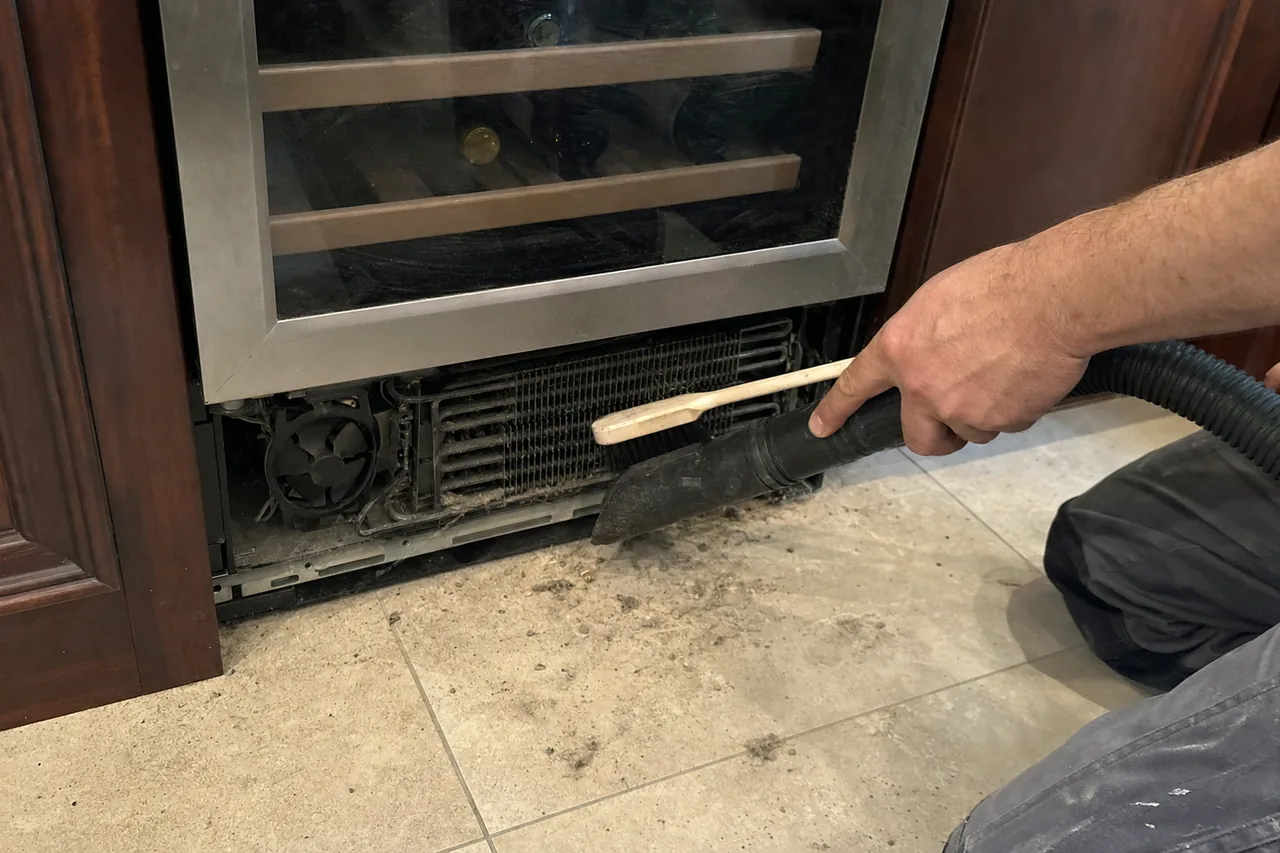
A packed condenser is not cosmetic, because it makes a compressor work harder every hour of every day.
We will tell you which list a part is on. That judgement is most of what a diagnostic is for.
The maintenance interval nobody writes down
Inland, an appliance service interval is a function of use. Here it is a function of exposure, and that means the calendar is a better guide than the cooking.
Once a year, on any property within a few blocks of the water: condensers cleaned, hood filters and blower checked, burner caps and electrodes inspected, outdoor equipment gone over properly. That is not an upsell schedule. It is the list of things that are cheap while they are early and expensive after they are not.