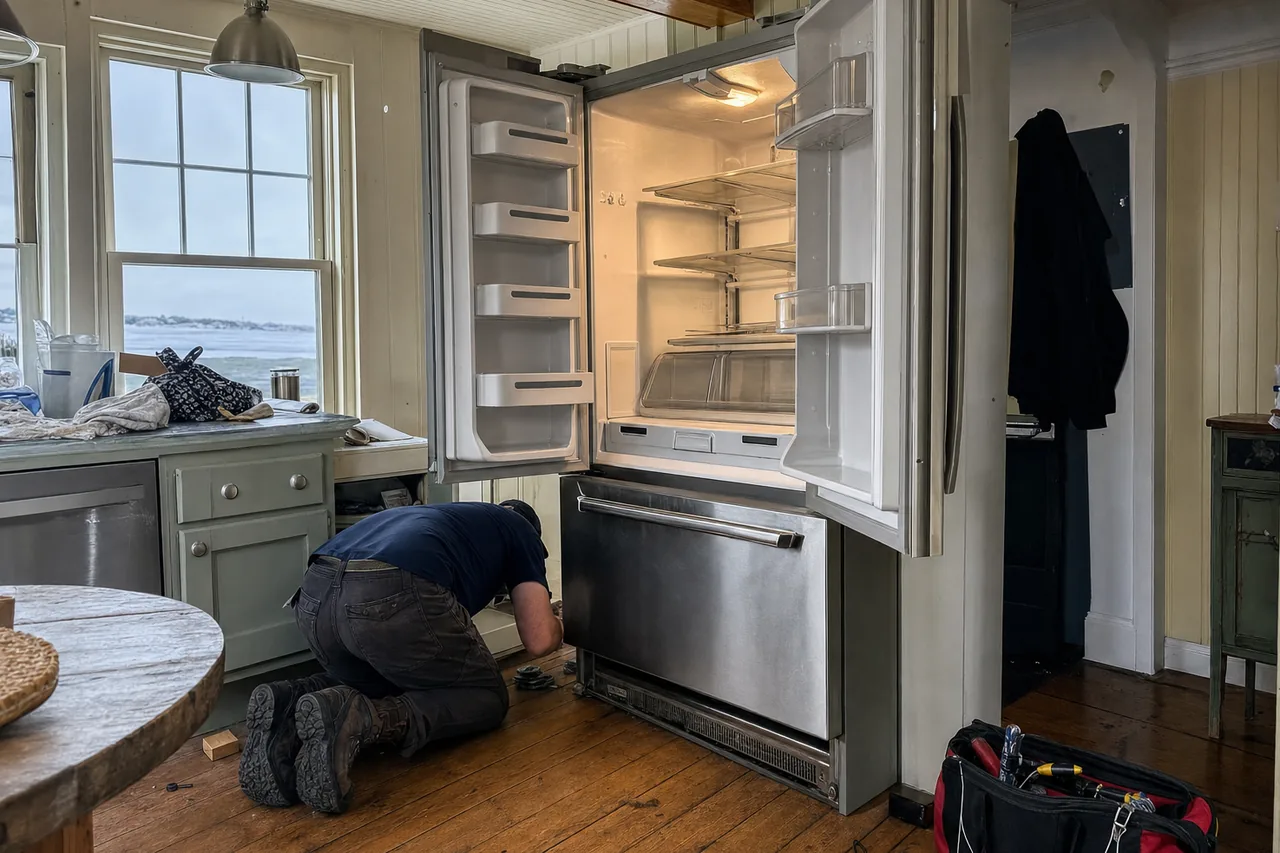
32250 · Duval County · The oldest cottages in the city, renovated around
The oldest kitchens in Jacksonville Beach sit on the blocks closest to the ocean, which is also where the chloride load is heaviest and the cabinet openings are smallest.
32250 · Duval County · Rebuilt tall, raised living space, full packages
South of Beach Boulevard the houses are newer, taller and heavier on built-in equipment, and almost every service question starts with how to reach the appliance.
32250 · Duval County · Waterfront houses, full built-in packages
On the Intracoastal side of Jacksonville Beach the salt load is lower than at the surf line and the humidity is higher, which changes what fails and in what order.
32266 · Duval County · Small, dense and largely pre-war, with later kitchens
Narrow streets, tight lots and older houses mean the plan for getting a professional range out of the kitchen matters as much as the diagnosis itself.
What changes from street to street
These pages exist because the addresses are not interchangeable. A kitchen four blocks from
the surf, a kitchen on the second floor of a raised house and a kitchen in a cottage that was
laid out before anyone put a professional range in a home are three different service jobs on
the same appliance. What separates them is the era the room was built in, how the equipment
was installed into it, and what the outside air does to metal at that distance from the water.
Build era decides the opening. An appliance opening cut for an earlier
generation of equipment is survivable for cooking and awkward for service, because a
built-in has to come forward before a hinge, a terminal block or a gas connection can be
reached.
Installation order decides the panel work. Where the millwork was finished
around a built-in after it went in, something has to come off before the machine can move —
and that is a different length of visit, quoted differently.
The circuit decides what the fault really is. Nuisance tripping and a
control that resets under load look like an appliance fault and are frequently a shared or
undersized supply. Supply gets measured before a board goes on an estimate.
The route decides how many people turn up. A professional range weighs
several hundred pounds. Stairs, a turn through a doorway narrower than the appliance, or an
original floor that has to be protected all change the plan before the tools come out.
Viking equipment only, everywhere on this list. Those questions get asked when
the appointment is booked rather than discovered with the appliance half out of its cabinet.
What it costs
Does the price change from one beach to the next?
It does not. The diagnostic is the same flat fee at every address inside the service area, and the repair bands below are the published ones. What changes street to street is the access, and that is a conversation at booking time.
Diagnostic fee and the researched repair bands for this equipment, parts and labour together.
The work
Parts and labour
Diagnostic visit
$80 flat, credited to the repair
Igniter or burner assembly
$190–$540
Control board or touch panel
$410–$1,010
Oven thermostat or heating element
$190–$600
These are the bands that fit this page.
The rest of the book is on the pricing page.
A range is what an appliance this size can honestly be described by before anyone has opened
it; the firm figure is written down after the diagnostic and before a part is ordered. Every
repair carries 90 days on labour and 365 days on parts.
Asked on the phone
Why does each beach get its own page?
Because the addresses are not interchangeable. Distance from the surf, the era the kitchen was built in, how the equipment was installed into it and the route out of the room all change inside a few miles here, and each one changes the visit. A page that could be about anywhere would be about nothing.
Does the price change by address?
No. The diagnostic is $80 flat everywhere inside the service area and the repair bands are the published ones. What changes by address is how long access takes and how many people the appliance needs, and that is discussed when the appointment is booked rather than found out mid-job.