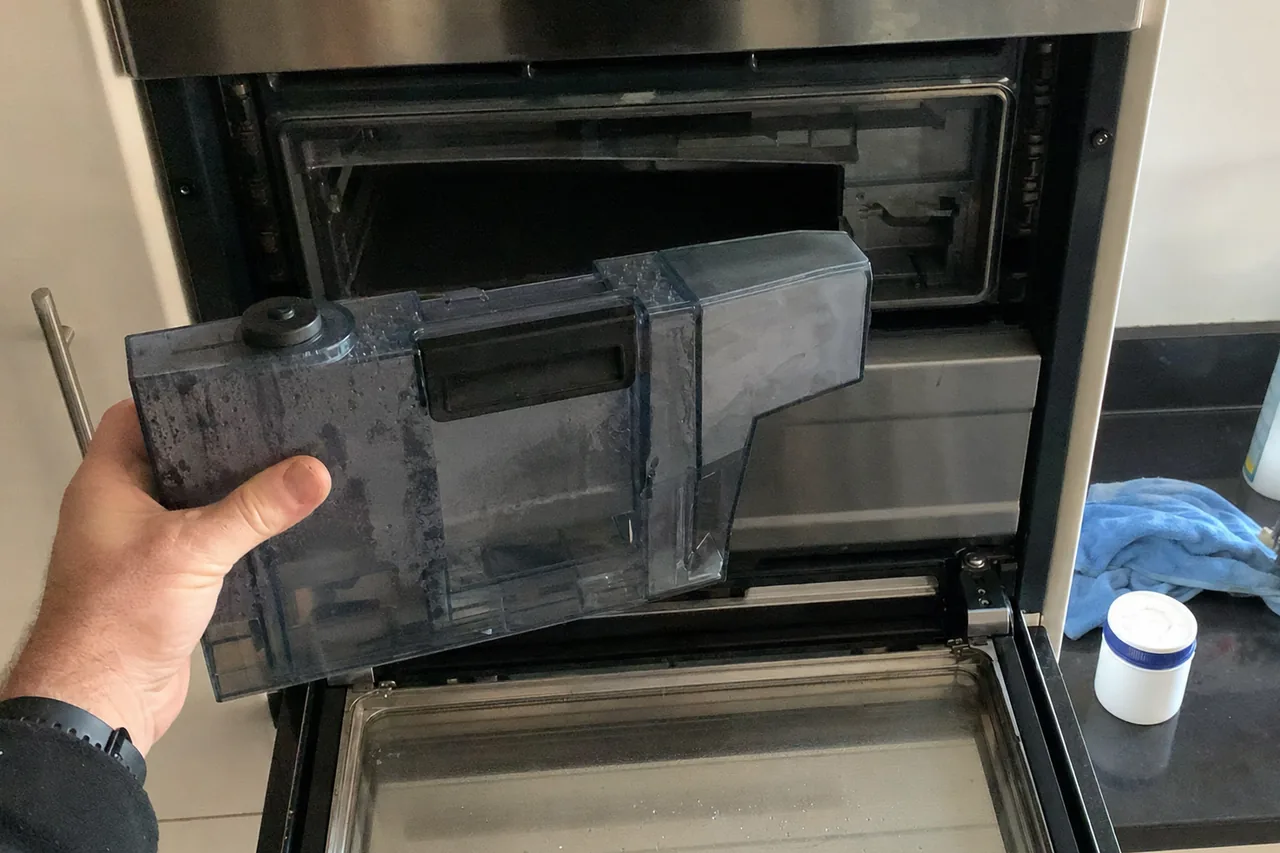
A wall oven is built into cabinetry, and that single fact shapes every repair. The unit cannot be walked out into the middle of the room. It slides forward on its own runners into whatever space the kitchen allows, its weight is carried by a cabinet somebody else built, and everything electrical is reached from the front or from the sides of the cutout.
Heat that will not arrive
An oven that never reaches setpoint is either not producing enough heat or not keeping it. Those are different repairs and it is worth separating them before anything is ordered.
Not producing enough heat, in an electric wall oven, usually means one of the two elements is not contributing. Bake and broil are separate circuits, so an oven that broils normally and bakes badly has already told you which half to look at. An element that has failed open is easy. An element that has developed a poor connection at its terminal block is more common at the beach and looks identical from the front — the oven works, then works less well, then trips something.
Not keeping it is a door problem. Wall oven doors carry glass and steel on hinges that see thousands of cycles, and a hinge that has weakened lets the door sit fractionally proud at the top. Heat leaves through that gap, the control compensates by running longer, and the cavity temperature starts swinging either side of setpoint instead of holding. Bakers notice this months before roasters do.
The lock after a self-clean
A door that will not release after a self-clean is the single most common call-out on double wall ovens. Self-clean drives the cavity to its highest temperature of the year, and everything in the door assembly expands with it — including a latch motor and a switch stack that have spent the rest of the year doing almost nothing.
Most of the time the mechanism has simply stalled and the fix is mechanical. It is worth knowing that a full self-clean is the hardest hour a wall oven ever works, and on an older unit it is the cycle most likely to end in a repair. If a kitchen is being used for a holiday and the oven matters, that is not the week to run it.
Controls and the storm season
Wall oven controls sit behind the trim above or below the door, in a cabinet cavity that never gets airflow. In a humid coastal house that cavity holds moisture, and connector pins corrode slowly. Add roughly sixty-eight thunderstorm days a year on the beaches, with the brief outages and small surges that come with them, and the result is a control that becomes intermittent before it dies.
A dark panel on one oven of a double stack while the other works normally usually means a supply or a connection, not two failed boards.
The cutout question
In the older beach cottages around 1st to 5th Street, the cabinet cutout is frequently not the size the current generation of appliance expects. That does not stop a repair, but it does decide how far the unit can come forward and whether a hinge or an element can be reached without cabinet work. We ask about the opening and the surrounding cabinetry before the visit so the estimate reflects the real job.
The visit
The $80 diagnostic covers calibration against an independent thermometer, both heat sources under load, convection operation, door seal and hinge condition, the latch assembly, and the control and its supply. Written estimate before anything is opened or ordered. Genuine OEM parts, 90 days labour, 365 days parts.